
BEYOND ENERGY SAVINGS: THE GHT ADVANTAGE
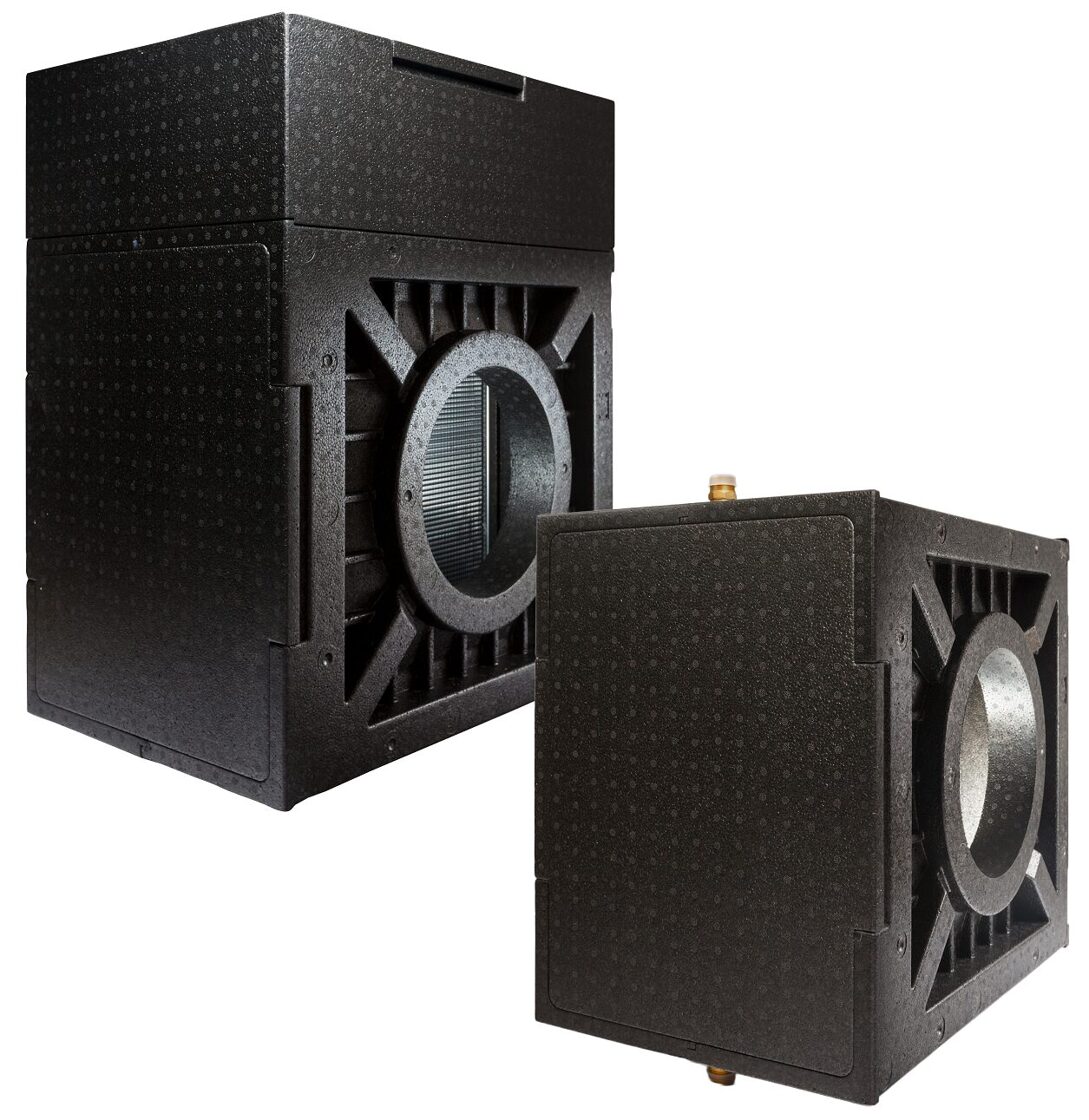
While standard HRV/ERV systems struggle in extreme temperatures, the GHT Geothermal Pre-conditioning module acts as a "force multiplier" for your ventilation—protecting your building's physics and delivering unmatched indoor climate stability.
Building Risks Avoided
-
Winter Defrost Imbalance Prevents negative pressure cycles during standard defrost modes, which draw freezing air through micro-cracks and compromise building integrity.
-
Ductwork Condensation & Mold Strips excess moisture from humid summer air, physically stopping mold spores from developing inside your ventilation ducts.
-
Summer Overheating (Fake Bypass) Unlike a standard HRV bypass that blows hot +30°C (+86°F) outdoor air directly indoors, GHT actively cools the air first.
-
Peak Electricity Spikes Completely removes the reliance on energy-hungry electric pre-heaters (PTC/TEN) during sub-zero winter days.
Premium Comfort Gained
-
True "Free Cooling" Utilizes the earth's natural thermal inertia to cool incoming summer air, costing only the minimal power of a small circulation pump.
-
Active Dehumidification Lowers absolute humidity to create a crisp, highly comfortable indoor climate, eliminating the "stuffy" and muggy summer feeling.
-
Maximized HRV/ERV Lifespan Keeps your core ventilation unit operating in its optimal, safe temperature zone year-round, extending equipment longevity and efficiency (COP).
-
100% Guaranteed Air Balance Delivers continuous, uninterrupted, and perfectly balanced fresh air 365 days a year, regardless of extreme outdoor weather events.
GHT Geothermal Simulator
Engineering & ROI Calculator
Project Details (For PDF Export)
System Engineering Specs
🔥 Heating Savings
Based on avg. 50% load over total season vs electric pre-heater.
❄️ Cooling & Dehumidification
Based on season hours vs traditional split-AC system.
| Total Savings Yr 1* | Yr 3 | Yr 5 | Yr 10 | System ROI |
|---|---|---|---|---|
| - | - | - | - | - |
Seasonal Energy Consumption (kWh)
Disclaimer & Accuracy Margins: This simulator provides an indicative engineering estimate. The Total Active Pipe Length for horizontal loops relies on general soil profiles and represents only the active heat exchange area; it does not include the runout pipes connecting the trench or bore to the mechanical room. The Vertical Bore Depth is calculated using the VDI 4640 standard for medium-conductivity geology (approx. 50 W/m) and indicates the drilling depth required. For a standard out-and-back U-tube, you must purchase twice this depth in pipe (indicated in parentheses). The vertical calculation has an estimated error margin of ±15% to ±20%, as deep-earth temperatures remain relatively stable regardless of surface climate extremes.
The HVAC thermodynamics and latent cooling coefficients are derived from ASHRAE Fundamentals. These results are NOT a final installation blueprint. A local certified geothermal engineer or driller MUST recalculate and verify exact bore depths and loop lengths based on site-specific Thermal Response Tests (TRT), local groundwater flow, and regional building codes before purchasing materials or drilling. GHT Solutions assumes no liability for system sizing or performance.

Geothermal Simulator
Engineering & ROI Report
Project Details
Design Parameters (Inputs)
| Energy Source - | Fluid Type - | Airflow - | Soil Type - |
| Winter Outside T. - | Summer Outside T. - | Summer RH - | Operating Hours - |
| Winter Fluid T. - | Summer Fluid T. - | Elec. Tariff - | Avoided AC Cost - |
System Specs
| Required Pump Flow: | - |
| Total Active Pipe Length: | - |
| Vertical Bore Depth (Opt): | - |
| Peak Thermal Load: | - |
| Fluid Used: | - |
🔥 Heating Savings
Based on avg. 50% load over total season vs electric pre-heater.
❄️ Cooling & Dehumidification
Seasonal Energy Consumption (kWh)
Disclaimer & Accuracy Margins: This simulator provides an indicative engineering estimate. The Total Active Pipe Length for horizontal loops relies on general soil profiles and represents only the active heat exchange area; it does not include the runout pipes connecting the trench or bore to the mechanical room. The Vertical Bore Depth is calculated using the VDI 4640 standard for medium-conductivity geology (approx. 50 W/m) and indicates the drilling depth required. For a standard out-and-back U-tube, you must purchase twice this depth in pipe (indicated in parentheses). The vertical calculation has an estimated error margin of ±15% to ±20%, as deep-earth temperatures remain relatively stable regardless of surface climate extremes.
The HVAC thermodynamics and latent cooling coefficients are derived from ASHRAE Fundamentals. These results are NOT a final installation blueprint. A local certified geothermal engineer or driller MUST recalculate and verify exact bore depths and loop lengths based on site-specific Thermal Response Tests (TRT), local groundwater flow, and regional building codes before purchasing materials or drilling. GHT Solutions assumes no liability for system sizing or performance.